
The Edge
840
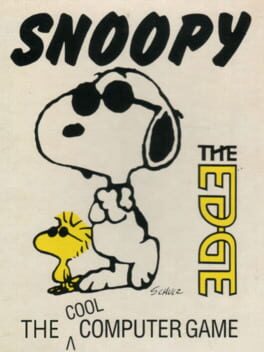
Edge Games, Inc. is an American video game developer and publisher headquartered in Pasadena, California, best known for the practices of its founder and chief executive officer, Tim Langdell, in enforcing trademarks relating to the word "edge", which sources have described as "litigious". Langdell has defended these practices, stating that Edge has only sued two companies since the late 1980s. In 2010, Edge Games sued Electronic Arts for trademark infringement, but eventually settled, with Edge surrendering many of its registrations. The United States Patent and Trademark Office (USPTO) cancelled the trademarks by court order in April 2013. History Edge Games was founded in California in 1990 by Tim Langdell. At that time, it acquired the intellectual property assets of Langdell's former company, Softek Software, itself founded in 1980 in London. Softek's catalog includes several games, such as: Fairlight, released in 1985, and Garfield: Big Fat Hairy Deal, released in 1987. Since the 1989 release of Snoopy and Peanuts Edge Games have released nine games in the last 25 years. Trademark disputes Edge Games has been involved in a number of disputes over trademarks connected to the word "edge". Edge (iOS game) In May 2009, French indie game developer Mobigame had their iOS title Edge removed from Apple's App Store in the US and the UK due to lawsuit threats by Tim Langdell. According to Mobigame, the dispute arose while they were trying to register a trademark for Edge in the US, while Langdell claims he owns the global trademark on "Edge". According to the email dialogue between Langdell and Mobigame head David Papazian, shared with Eurogamer, Langdell delivered an ultimatum to Mobigame in exchange for a promise not to litigate. If they changed the game's name, he demanded 25% of the game's revenue for the time the title was on sale under the name "Edge", and if they licensed the Edge name, they would give him 10% of the game's revenue in perpetuity and subtitle it "An Homage To Bobby Bearing", with the Edge Games logo on the title screen. Papazian claims that he suggested the alternative title "Edgy", but that this was rejected by Langdell for being too similar to "Edge". Edge Games subsequently registered "Edgy" as a trademark. An Edge Games spokesperson, writing from Tim Langdell's personal email address and signing off as "Tim Langdell", claims that their registration was the result of a misunderstanding "probably in part caused by David Papazian's less than perfect English". However, many journalists who talked with David Papazian confirmed that Papazian's English is "absolutely flawless". On June 18, 2009, it was reported that the game had been restored to the App Store with its original name intact, though later reports indicated that the game had once again been pulled in July 2009, and Mobigame confirmed that they had voluntarily withdrawn the game while considering their options. Mobigame's lawyer, speaking to Eurogamer, stated that "Mobigame's position is that the trademarks owned by Edge Games are not enforceable against Mobigame or any third party in respect of the distribution of the Edge game," because "there is unlikely to be any confusion or association between them and Mobigame's game" and those trademarks "are liable to be revoked". Soon after, Edge Games published an "open letter" on its website claiming that several of the statements in the Eurogamer article were false. Mobigame's lawyers issued a response to the effect that the Eurogamer article is accurate and that Edge Games's rebuttal is false, and stated that they were gathering evidence to demonstrate that communications Edge Games claims, in its rebuttal, to have made did not actually occur. The game was eventually put back on the App Store in UK and US markets on October 7, 2009, under the title Edge by Mobigame. Speaking with Kotaku, Papazian said, "On the legal side, (Langdell) cannot claim anything against "Edge by Mobigame" and Apple knows that, so we hope everything will be alright now." On November 26, 2009, Edge by Mobigame was again removed from the App Store. An unnamed Edge Games representative stated "Adding 'by Mobigame' was determined not to get around infringement." On December 1, 2009, the game returned to the App Store under the name Edgy, but Mobigame soon removed it for fear that Langdell would use the legal precedent in his legal battle against EA. In May 2010, the game returned to the App store under the name Edge. Mobigame had the following to say regarding the ongoing legal battle: "Thanks to us the word "edge" is now free to exist on the App Store like on any other marketplace, and games like Mirror's Edge, Shadow Edge, Killer Edge Racing or Edge by Mobigame can live on our iDevices." Electronic Arts petition for trademark cancellation Electronic Arts (EA) petitioned the United Stated Patent and Trademark Office (USPTO) to cancel a range of registrations associated with Edge Games and Future Publishing on September 11, 2009. EA stated that it had filed the petition because Edge Games had "continuously" threatened legal action with respect to the title of EA's 2008 game Mirror's Edge, and that the trademarks had either been obtained by fraud or abandoned through nonuse. Edge Games' Tim Langdell responded that Edge Games had not threatened EA with legal action, and that the two companies had been in amicable settlement talks over EA's use of the mark "Mirror's Edge" since late 2008. Langdell added that the 2008 federal court case Edge Games, Inc. v. Velocity Micro, Inc. had ruled that Edge had not obtained any of its trademarks by fraud, nor abandoned them through nonuse. Prior to filing their petition, EA voluntarily abandoned their application for the "Mirror's Edge" mark on September 8, 2009. Edge Games filed a trademark infringement lawsuit against EA over the "Mirror's Edge" mark in June 2010. Almost a year later, and after a case in the UK court against Future, Langdell claimed that Edge Games filed the lawsuit against EA at the insistence of its trademark partner Future Publishing. Edge Games charged EA with engaging in willful infringement and unfair competition, and requested damages and a court injunction against further infringement. EA responded with a counterclaim to cancel Edge Games' trademarks, and argued that Edge Games obtained the trademarks based on fraudulent representations to the USPTO including doctored submissions of magazine covers and game boxes. EA added that the trademarks had not been in commercial use at the time of registration. The judge denied Edge Games' request for an injunction in October 2010, stating that Edge Games had abandoned use of its marks, misrepresented its case to the USPTO, and not shown their use of the trademarks to "legitimately extend beyond trolling various gaming-related industries for licensing opportunities." EA and Edge Games reached a settlement in early October, where Edge Games would surrender the trademarks "edge" (registered twice), "cutting edge", "the edge", and "gamer's edge". No damages were awarded to EA or Edge Games, and each would pay their own legal fees. The settlement stipulated that neither party admitted fault or wrongdoing and that no party was found guilty of wrongdoing. On October 10, 2010, it was reported that the settlement had been approved by the judge, and a final order had been issued. The USPTO cancelled the five "Edge" trademarks on April 9, 2013. Future Publishing breach In 2011, it was revealed that Future Publishing, the publisher of game magazine Edge, had brought suit against Langdell in the United Kingdom for breach of contract, breach of copyright, and passing off through the use of the magazine's logo for Edge Games and his representations of his connection with the magazine. Future had licensed the trademark for the use of the word "Edge" in magazines from Langdell in 1993, when launching the magazine. The publisher bought the relevant part of the trademark from Langdell outright in 2005. In the intervening years, Future claimed, Langd
Jogos Desenvolvidos
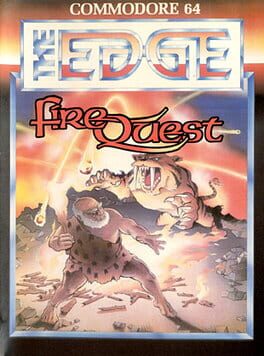
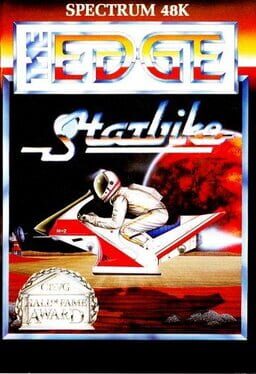
Página 1